Last updated on November 10th, 2026 at 10:04 am
Table of Contents
Introduction: Brown Butter Sage Pasta
Why Brown Butter Sage Pasta is Perfect for Fall
The arrival of fall brings with it a desire for warm, comforting dishes that envelop us with their rich, savory flavors. Brown Butter Sage Pasta is one such recipe that captures the essence of fall perfectly. With its nutty, aromatic notes and the earthiness of fresh sage, this pasta dish is a wonderful way to celebrate the season. Easy to prepare and deeply satisfying, it’s an ideal choice for a cozy family dinner or a special occasion with friends.
As the temperatures drop and the leaves begin to change, there’s nothing quite like a bowl of pasta to bring a sense of warmth and contentment. The combination of brown butter and sage creates a sauce that is both simple and luxurious, making it a staple in fall pasta recipes.
The Origins of Brown Butter Sage Pasta
Brown Butter Sage Pasta, or ‘Pasta al Burro e Salvia,’ has its roots in Italian cuisine, where the simplicity of ingredients highlights the quality and flavor of the dish. Traditionally, this dish is enjoyed in the northern regions of Italy, where butter and sage are commonly used in cooking. The technique of browning butter, known as ‘beurre noisette’ in French, adds a layer of complexity and depth to the dish, making it a beloved choice among pasta enthusiasts.
Incorporating this Italian classic into American kitchens is seamless, thanks to the availability of quality ingredients and the straightforward cooking process. This dish pays homage to its Italian heritage while being easily adaptable to suit American tastes and preferences.

Love Italian cooking at home? 🍝
Get new pasta, pizza and dessert recipes made for American kitchens in your inbox every week. Free, no spam, unsubscribe anytime. See our Privacy Policy.
Ingredients
Essential Ingredients for Brown Butter Sage Pasta
Creating the perfect Brown Butter Sage Pasta starts with selecting the right ingredients. Here are the essentials you’ll need:
- Pasta: Choose a high-quality pasta, such as fettuccine or linguine, to hold the sauce well.
- Butter: Unsalted butter is preferred to control the seasoning of the dish.
- Sage: Fresh sage leaves are crucial for imparting the earthy, herbal flavor characteristic of this dish.
- Parmesan Cheese: A generous grating of Parmesan adds a savory finish to the pasta.
- Garlic: Optional, but a clove of garlic can enhance the depth of flavor.
- Salt and Pepper: To taste, for seasoning.
Substitutions and Variations
While the classic recipe is hard to beat, there are several ways to put your own spin on Brown Butter Sage Pasta:
- Nuts: Toasted pine nuts or walnuts can be added for a crunchy texture.
- Vegetables: Incorporate seasonal vegetables like roasted butternut squash for added sweetness and nutrition.
- Cheese Variations: Try Pecorino Romano or Grana Padano for a different cheese profile.
- Gluten-Free Pasta: Use gluten-free pasta to accommodate dietary preferences without sacrificing flavor.
Step-by-Step Instructions
Preparing the Brown Butter
To create the brown butter, start by melting unsalted butter in a saucepan over medium heat. As the butter melts, it will begin to foam. Stir gently and watch for the color to change to a golden brown. The butter will release a nutty aroma, signaling that it’s ready. Be careful not to burn it, as this will impart a bitter taste.
Cooking the Pasta
While the butter is browning, bring a large pot of salted water to a boil. Add the pasta of your choice and cook according to the package instructions until al dente. Reserve a cup of pasta water, then drain the pasta and set aside.
Combining Ingredients for the Perfect Dish
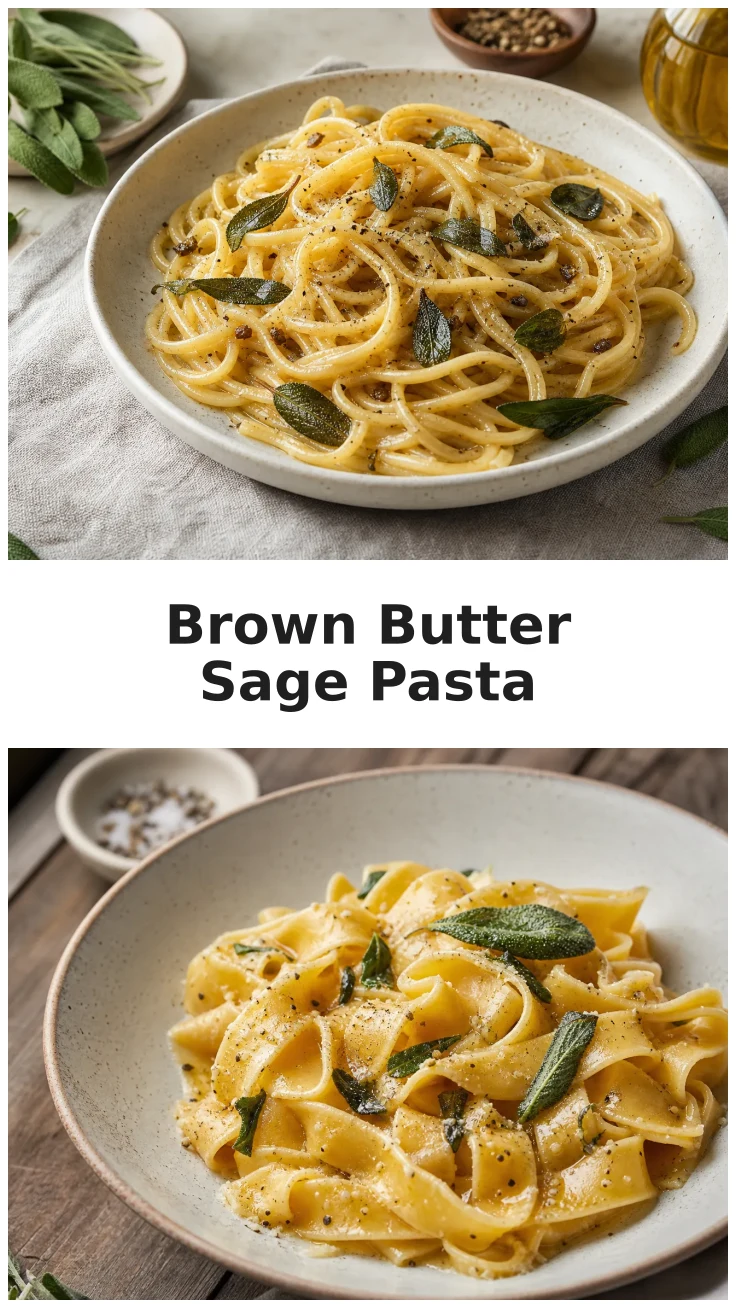
Once the butter is browned, add the fresh sage leaves and garlic (if using) to the saucepan. Sauté for a minute until the sage is crisp and fragrant. Add the cooked pasta to the butter sauce, tossing to coat thoroughly. If the pasta seems dry, add some reserved pasta water to achieve the desired consistency.
Finish by stirring in grated Parmesan cheese, allowing it to melt and blend into the sauce. Season with salt and pepper to taste, and serve immediately.
Pro Tips
Mastering the art of Brown Butter Sage Pasta requires a few key techniques to enhance the overall experience:
- Perfecting Brown Butter: Keep a close eye on the butter as it browns to prevent burning. The right color is a deep golden brown, not dark brown.
- Fresh Sage: Use fresh sage leaves for the best flavor. Dried sage doesn’t provide the same aromatic quality.
- Cheese: Grate your own Parmesan cheese for optimal texture and flavor. Pre-grated cheese can be dry and less flavorful.
- Pasta Water: The reserved pasta water is a great tool for adjusting the sauce consistency, adding a bit at a time until you reach the perfect balance.
One of the most important tips to remember is not to rush the browning process. Patience is key to achieving the rich, nutty flavor that defines the sauce.
Love Italian cooking at home? 🍝
Get new pasta, pizza and dessert recipes made for American kitchens in your inbox every week. Free, no spam, unsubscribe anytime. See our Privacy Policy.
Serving Suggestions
Pairing with Seasonal Sides
Brown Butter Sage Pasta pairs beautifully with a variety of side dishes. Consider serving it with a vibrant, fresh salad or roasted autumn vegetables like Brussels sprouts or carrots, which complement the flavors of the pasta. A side of Garlic Butter Cherry Tomato Pasta can also add a delightful contrast.
For a more substantial meal, serve alongside a Butternut Squash Flatbread Feta Sage, which echoes the seasonal theme of the pasta.
Wine and Beverage Pairings
The rich flavors of Brown Butter Sage Pasta are complemented by a crisp, dry white wine such as a Chardonnay or Sauvignon Blanc, which cuts through the richness of the butter. For a non-alcoholic option, a sparkling apple cider can provide a refreshing balance.
Nutritional Information
Caloric Breakdown
Brown Butter Sage Pasta is a hearty dish, with each serving providing approximately 400 calories. This includes macronutrients such as carbohydrates from the pasta, healthy fats from the butter, and protein from the cheese.
Nutritional Benefits of Sage
Sage is not only flavorful but also packed with antioxidants and anti-inflammatory properties. It is known for aiding digestion and supporting overall health, making it a beneficial addition to your fall pasta recipes.


Golden Brown Butter Sage Pasta

Equipment
- 1 large saucepan
- 1 Large pot
- 1 Colander
Ingredients
Main Ingredients
- 8 oz fettuccine pasta
- 1/2 cup unsalted butter
- 1/4 cup fresh sage leaves
- 1/4 cup grated Parmesan cheese
- Salt and pepper to taste
Instructions
Preparation
- In a large saucepan, melt the unsalted butter over medium heat. Once melted, continue to cook while stirring until the butter turns a golden brown color, releasing a nutty aroma, about 5-7 minutes.
- Bring a large pot of salted water to a boil. Add the fettuccine and cook until al dente, about 8-10 minutes. Reserve 1 cup of the pasta water, then drain the pasta using a colander.
- Add the fresh sage leaves to the brown butter and sauté for 1 minute. Add the cooked pasta to the saucepan and toss to coat evenly. Stir in the grated Parmesan cheese, adding reserved pasta water as needed to reach the desired sauce consistency.
Serving
- Transfer the pasta to serving bowls. Garnish with additional grated Parmesan cheese and freshly cracked pepper. Serve immediately while hot.
Storage
- Allow the pasta to cool completely before storing in an airtight container. Refrigerate for up to 3 days. Reheat gently on the stovetop or in the microwave, adding a splash of water to restore moisture.
Notes
Ingredient Substitutions: Use gluten-free pasta if needed. Try Pecorino Romano instead of Parmesan for a different taste.
How to Serve: Pair with a side salad or roasted vegetables for a complete meal.
Storage & Freshness: Store in an airtight container and refrigerate for up to 3 days.
Make-Ahead Tips: Prepare the brown butter in advance and reheat before tossing with pasta.
FAQ
Can I make Brown Butter Sage Pasta ahead of time?
Yes, you can prepare parts of the dish ahead of time. Cook the pasta and make the brown butter separately. Store them in the refrigerator for up to two days. When ready to serve, reheat the brown butter, add fresh sage, and toss with reheated pasta. This ensures the dish retains its fresh, aromatic quality.
What alternatives are there for fresh sage?
If fresh sage is unavailable, you can substitute with dried sage, though it won’t provide the same aromatic intensity. Use about half the amount of dried sage compared to fresh. Alternatively, experiment with other herbs like thyme or rosemary, keeping in mind the change in flavor profile.
Enjoyed this recipe? Leave a review!
There are no reviews yet. Be the first one to write one.